


More of the right opportunities
Useful context and fit criteria help your team focus on the work worth pursuing.
MeasureQualified inquiries
AI systems for owner-led businesses
Quoting. Chasing. Writing up. Following up. Remembering.
Hands-on implementation.
South Shore, Massachusetts
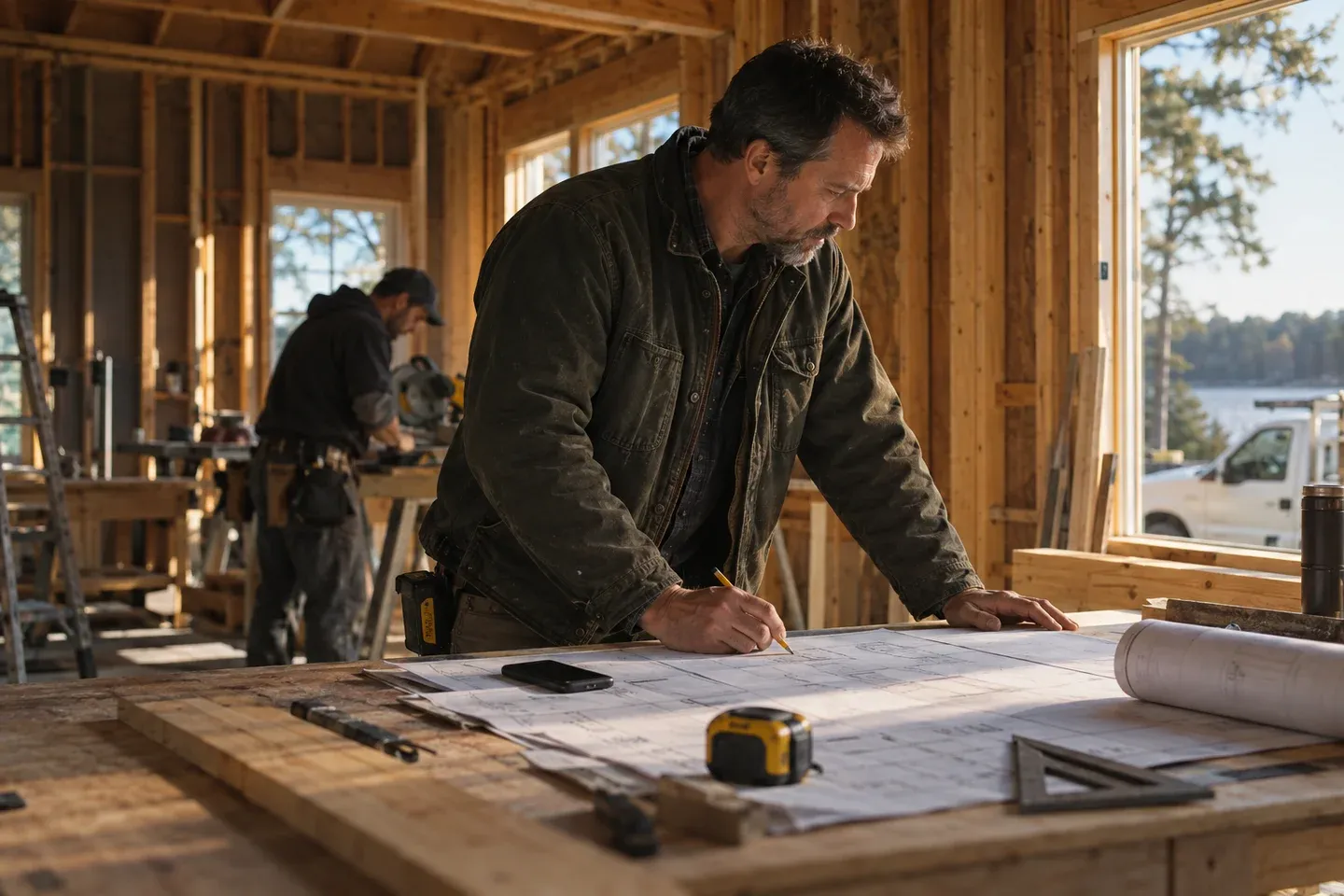
Job closed · Hingham · yesterday
Missed call followed upGet customers
5 emails summarizedRun the business
Review request scheduledKeep customers
01 START HERE
Thirty minutes at your place, no charge and no deck.
Most of the visit is about the bids. How many go out, what one actually costs once you count the drive and the walk and the sitting down to write it, and when in the day that writing actually happens. Then how work comes in, where your prices really live, and what happens to a call at a quarter to seven on a Friday.
Two things happen while we are there, and you watch both. We call your own number the way a homeowner would, and we look at what happens to it together. And we build you something small out of your own documents, usually in about twenty minutes, so you can ask it a question you already know the answer to and see whether it gets it right.
You keep it whether or not we work together.
If what you already have is working, you will hear that first. That is not modesty. It is the only way the Walkthrough is worth your half hour.
Book a WalkthroughEvery job you have ever done is in there somewhere. The invoice, the date, the total. What is not in there is the part that took years to learn.
Why that street gets a site visit. Why something moved from allowances into exclusions. Which supplier you will not use in November. Which objection is the one worth answering carefully.
None of that is written down. It is in your head, and in the heads of the two people you cannot afford to lose.
A question worth sitting with.
Not the files. The files stay. What leaves is the judgment: what to include, what to exclude, what a job like that costs when it goes sideways, and which customer gets the careful version of the quote.
Most owners answer this once, the hard way.
02 Find the opportunity
Choose a stage. See the work AI could handle, and the decisions your team keeps.
Explore all five stages03 One workflow, end to end
One example of what we can build: a contractor’s lead-to-revenue workflow. Try the intake, review the opportunity, and see how outcomes are tracked.
Interactive example · illustrative dataRecommended next action
The business picture
| Source | Inquiries | Qualified | Won |
|---|---|---|---|
| Google Organic | 9 | 7 | 2 |
| Referrals | 6 | 5 | 2 |
| Marketplace | 5 | 1 | 0 |
| Other | 3 | 1 | 0 |
04 The business case
More useful work. Less time lost. Every implementation has a business outcome we can measure.
Useful context and fit criteria help your team focus on the work worth pursuing.
A missed call or after-hours inquiry gets a timely, relevant next step.
Move information between emails, documents, and systems with less copying and retyping.
Customers get clear updates and reminders without having to chase your team.
Open estimates and customer requests stay visible until someone takes the next step.
Open work, exceptions, and decisions arrive in a concise owner brief.
Connect inquiries to qualified work, estimates, and outcomes where your process supports it.
 The work behind the work.
05 Who we work with
Winning work. Coordinating people. Looking after customers. We build around the work you do every day.
We start with service businesses: measurable workflows, recurring work, and a clear link to revenue. The approach extends to other owner-led industries.
06 The Paratus Method
The usual way this goes wrong is a long build. Months of setup, invoices, and nothing you can use until the end. The season gets busy and it dies with nothing to show. So the first job is one thing, done properly, in a few weeks. Estimates drafted from your prices, in your language.
What makes it worth more than the hours it saves is what it leaves behind. Your prices, your exclusions, your way of writing a scope — captured once. The next thing starts from that packet instead of from nothing.
Understand the workflow and business case.
Define the process, rules, systems, and human decisions.
Connect and configure the system.
Track whether it creates measurable value.
Move to the next useful workflow.